Special Episode! I published a book, now what?
Today on Academic Book Club, we speak to Jenny Rossberg, Publicity and Rights Manager for New York University Press.
Jenny shares resources and expert advice for experienced, new, and aspiring authors, looking to get the word out about their latest academic books - valuable knowledge no author should be without - especially how to avoid the pitfalls in today’s media landscape. An expert cheerleader and connector, Jenny shares what she thinks is needed in publishing. Are you the person to write it? Listen in and see what Jenny has to say!
Listen Here!
-
Alison Stratten (00:01)
Today on Academic Book Club, I am thrilled to welcome Jenny Rosberg. Hi Jenny. If you'd start by telling us a little bit about what you do and who you are.
Jenny Rossberg (00:13)
Yes. well, thank you. Thank you for having me. It's really great to be here. my name's Jenny Rosberg. I am the publicity and rights manager at New York University Press. my job is kind of twofold. So, as a publicity manager for the press, my responsibility is to send our books out for academic journal reviews and help connect authors with various media outlets, whether that's
Jenny Rossberg (00:41)
Podcasts like the Academic Book Club, or you know, conventional book review outlets in the mainstream media, journalists who might be interested in citing their research and expertise. and then I also manage what we call subsidiary rights or sub rights in publishing. So that involves making arrangements with other publishing houses, such as audiobook publishers or foreign presses, to
Jenny Rossberg (01:10)
license and sell translations of NYU press books.
Alison Stratten (01:14)
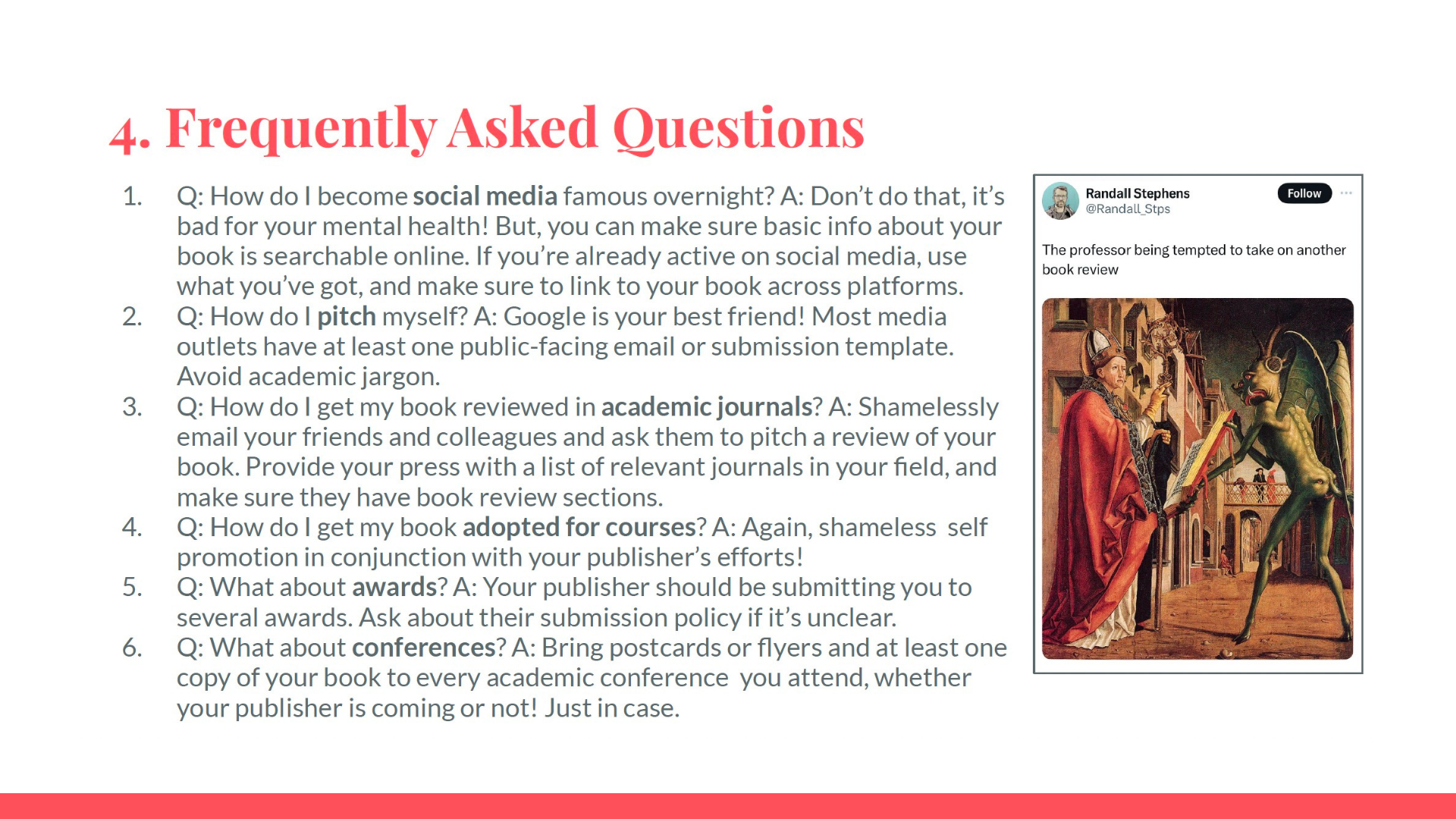
Thank you. So we interview a lot of authors who have new and upcoming books. And I'm wondering if as a publicist, if you have some advice for them in sort of getting the word out about their books.
Jenny Rossberg (01:31)
Yeah, definitely. I think the the biggest role I have as a academic book publicist is kind of a cheerleader of the author's own efforts and connections. So the the very basic thing I recommend for every single author, whether you're publishing, you know, your your thesis dissertation as a as a monograph or
Jenny Rossberg (01:58)
Whether you've written a memoir or like a trade history book, the first thing that is really important for everyone to do is to activate your personal network of connections. So for a lot of people, this just looks like putting an email list together. it's not, you know, it's not rocket science. It's just make sure your friends and family and colleagues know about the book you know, months before it comes out.
Jenny Rossberg (02:26)
and when your publisher provides things like links to pre-order the book or discount codes, share those with your network, with your cohort, with your friends. That's I think one of the one of the most basic pieces of advice I have. and then of course, I think for other for academic authors, it's kind of a challenge to
Jenny Rossberg (02:54)
translate you know academic writing into publicly accessible information to kind of distill complex academic jargon or you know the nitty-gritty details of like a decades long research project into something that you know the the average person can understand. So I do have a couple of resources I I typically recommend for first-time authors in particular, first time academic authors
Jenny Rossberg (03:23)
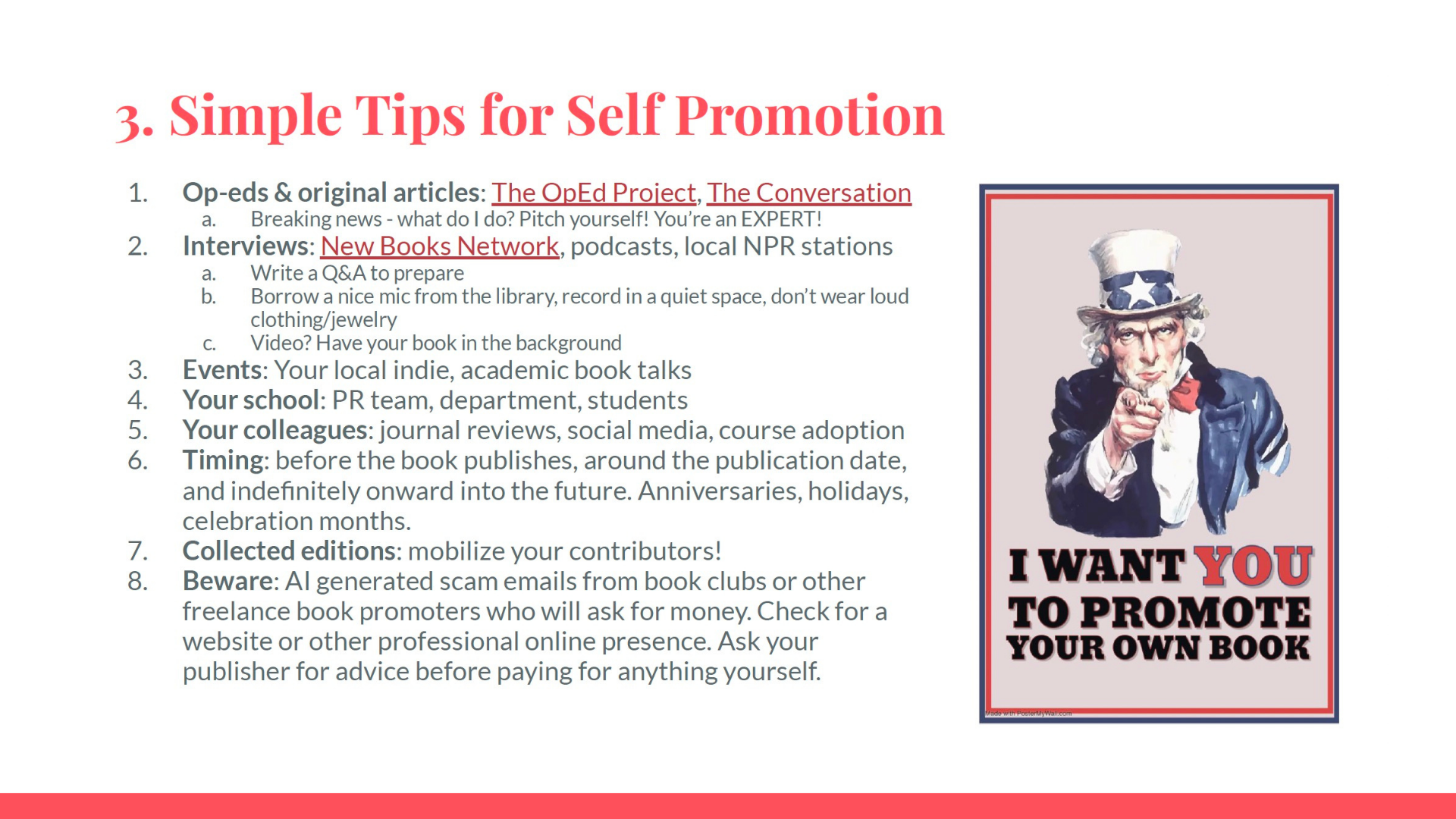
Authors specifically. So there's a really wonderful website called the Op-Ed Project that provides a combination of free materials and paid workshops for authors, especially from marginalized backgrounds who might not have the kind of industry connections that other people would would experience coming into publishing for the first time.
Alison Stratten (03:49)
Yeah.
Jenny Rossberg (03:49)
so they provide a lot of just really useful tips about how to write an op-ed, how to pitch it to the media. another specific publication I really love is The Conversation. They're really well researched and deeply edited website that exclusively publishes people with PhDs. You typically have to have a university affiliation to write for them.
Jenny Rossberg (04:19)
and they do a combination of kind of news reporting, but with you know, deeply researched academic backing for whatever
Alison Stratten (04:28)
Yeah.
Jenny Rossberg (04:29)
they're covering. they're a really wonderful publication for scholars who are trying to connect their research to something in the news cycle. So I would absolutely recommend them. And then the third place I I kind of recommend is like my tent pole podcast place is the the new books network.
Jenny Rossberg (04:48)
Does a lot of, you know, really great interviews with authors. Publishers can submit to them and authors can submit themselves to be considered for interviews. and and then of course, you know, Academic Book Club. It's a great place to read that. Yeah, exactly. Exactly.
Alison Stratten (05:02)
Okay. Up incoming.
Jenny Rossberg (05:06)
and then, you know, it's a it's a little bit different for people who are a bit more established who are maybe working on their second or third book, but the
Jenny Rossberg (05:17)
The first rule still applies, like, you know, put your list of contacts together, maybe people who talked to you about the first book and were excited about your next project coming out. and see, you know, what connections you built with your first publication that you can expand on for your second book, your third book, grow those relationships.
Alison Stratten (05:38)
Yeah, that's a fantastic answer. so you and we're gonna have some slides also from Jenny published on the website. So you'll be able to get more information. And I'll make sure the links to all of those fantastic places are shared as well. So you mentioned being a cheerleader, which I think is very interesting. So I wanna ask a little bit for people who are aspiring to be authors, maybe you can speak a little bit about that cheerleading.
Alison Stratten (06:05)
And some of those fears that authors have, especially I think new authors, I'm I know every time an author puts out a book, these fears resurface themselves, you know, we're putting out something new. But speaking specifically to aspiring authors who might be feeling like they want to do their book, they want to send in manuscripts, they want to start looking to publish a book, but they have those fears that require that cheerleading. Can you speak to the fears and also offer some advice for aspiring?
Alison Stratten (06:35)
Authors who might want to work with NYU Press.
Jenny Rossberg (06:39)
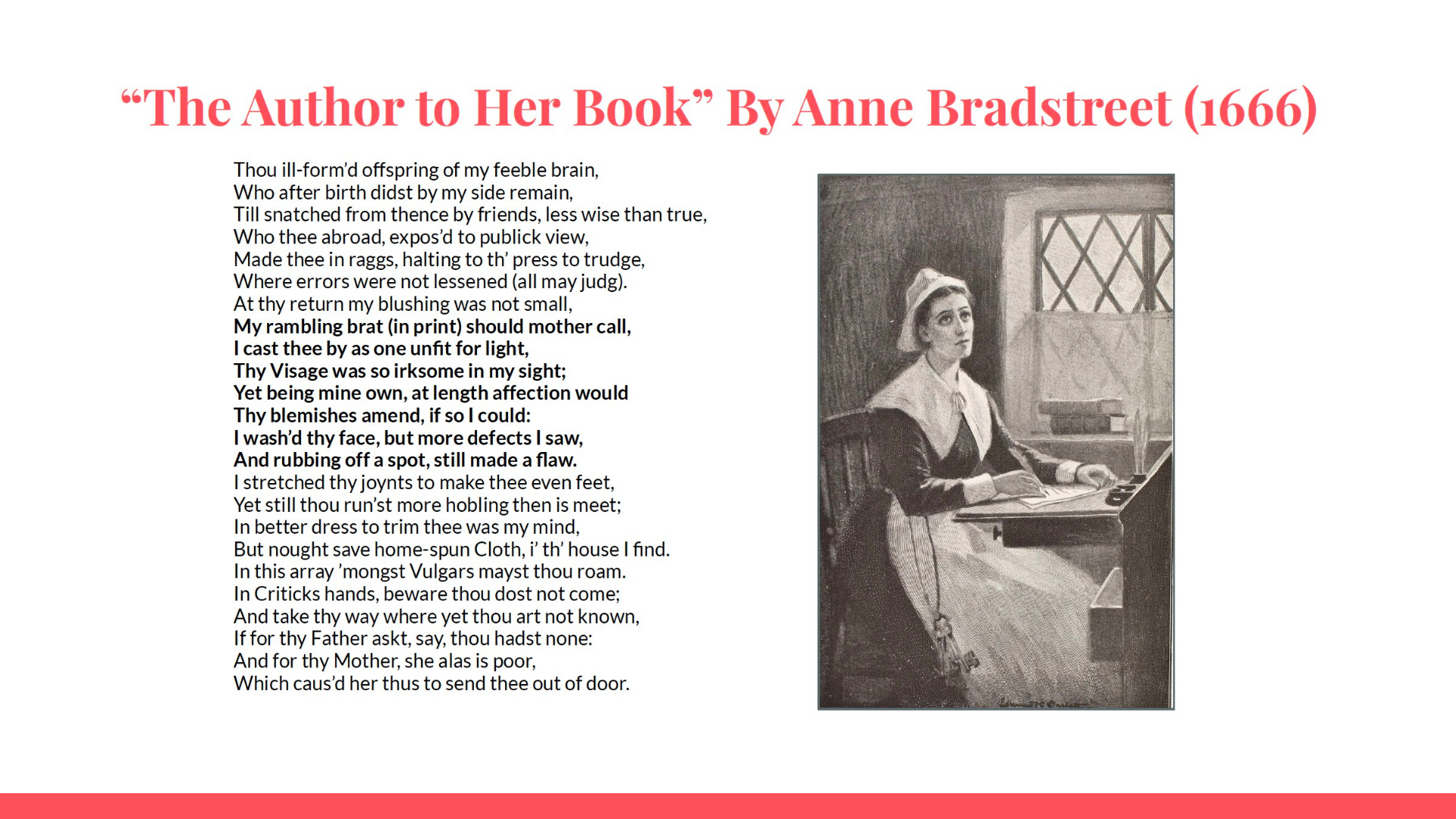
Yeah, I, you know, I I actually have this, it's an old Anne Bradstreet poem that I really love, that I I will include in my slide deck. and it's titled From the Author to Her Book. And it's this lovely old poem about the anxiety that every single author feels as a kind of mother, you know, birthing their book baby into this like
Alison Stratten (07:01)
Okay.
Jenny Rossberg (07:02)
cruel and unforgiving environment of criticism.
Alison Stratten (07:07)
Yeah.
Jenny Rossberg (07:08)
And I I remember reading that in high school and it really resonated with me as someone, you know, who writes in their free time, who loves writing, who loves books, of the the overwhelming anxiety that people feel. The other thing that I I really see in a lot of academic authors is imposter syndrome, which is something that, you know, I think we all deal with to some extent, but
Jenny Rossberg (07:36)
I think it can be really nerve-wracking to take up space with you know, such a sometimes like very provocative academic research and ideas. You know, NYU Press, we do a lot of social justice oriented work. So we we publish largely in like sociology, anthropology, religious studies, and
Jenny Rossberg (08:02)
I think one of the things I'm most proud about of of this press is you know, elevating some first-time authors who are maybe working in more niche or marginalized parts of their field. and I think, you know, people all across the academy have experiences of feeling like your research isn't good enough, you're you're not doing things the right way. this isn't this isn't anything new or it's not gonna be important.
Jenny Rossberg (08:32)
So I think I really want to encourage people to maybe do a little soul searching and build your build your confidence up a bit. Your book is worth it. At certainly at the point where it's gotten into the hands of a publisher, which is, you know, the point at which I'm interacting with authors, you know, you've done you've done the hard part, definitely. and I think for people who are working to publish a book, I mean, that is such
Jenny Rossberg (09:01)
a challenging part of the publishing industry, right? So, it's, you know, if you're if you're trying to publish a trade book, you're kind of working through an initial gatekeeping process of literary agents,
Alison Stratten (09:17)
Yeah.
Jenny Rossberg (09:18)
which I think is something important to acknowledge for people outside of the publishing industry, especially especially as like,
Jenny Rossberg (09:27)
you know, Amazon self-publishing has become like such a large platform. I think it's important to recognize that conventional publishing still functions under you know, an an agented system in in most cases. Publishing houses need your book to be brought to them by a literary agent. so I think just recognizing that step might be helpful for some first-time authors so that they're reoriented a bit.
Jenny Rossberg (09:56)
away from publishing houses and more towards literary agents as they're as they're kind of setting their markers of what they need to do. And then of course for for academic authors it's different, right? You're you know, submitting typically directly to editors. and our
Alison Stratten (10:12)
Yeah.
Jenny Rossberg (10:13)
books are peer reviewed, which is like the stand in for a literary agent who would read a novel and say this is really good and makes a contribution to literature.
Jenny Rossberg (10:25)
we have scholars who volunteer their time as peer reviewers who vet our all of our books and say like this is making a significant significant contribution to the scholarship, and you know, ask ask questions of the authors, engage with them in that way.
Alison Stratten (10:44)
So this is a question we didn't talk about before. So if you don't like the question, I can edit it out. Just so you know.
Jenny Rossberg (10:49)
Okay.
Alison Stratten (10:51)
Looking at book publishing and publicity, have you seen any changes or anything sort of up and coming in terms of publicity that you might want to share?
Jenny Rossberg (11:04)
gosh. Yes, this is this is kind of a a negative answer, but One of the big things that I think is impacting a lot of authors right now is very scammy email solicitations from people who are using generative AI to take descriptive copy of a book from a website and send out blast emails soliciting
Jenny Rossberg (11:34)
soliciting author engagement that once an author starts to reply, it becomes very clear that this person is asking for a couple of hundred dollars and that maybe they don't have the connections that they're purporting to have. so that's that's a bit that's maybe the negative answer. I'll I'll give a positive one too. But I do think Yeah.
Alison Stratten (11:54)
Yeah. No, the negative answer is important too. People need to know what to be careful of, for sure.
Jenny Rossberg (12:01)
I you know it's it's
Jenny Rossberg (12:03)
very hard to spot AI, like more and more. I would say like the best kind of the best method is to look people up online, look up their names. they should have a website link. If they do not have a website link that appears to be, you know, i interacting with other people, like they have a social media presence with a significant amount of followers, they have a website, like those those clues can be very helpful.
Alison Stratten (12:32)
Yeah.
Jenny Rossberg (12:32)
I would also just caution people against paying for publicity coverage. it's this is kind of hard because the distinctions between publicity and marketing can be quite blurry. my colleagues in marketing often don't like when I say this, but I do think it's a functional distinction. Marketing is coverage you pay for, publicity is coverage you earn. So thing, you know, solicitations to pay for things.
Jenny Rossberg (13:03)
I some of them I'm sure are legitimate. Some of them work. There are, you know, you have to pay a publicist. If you hire a freelance publicist, you have to pay them to promote your book. I'm not saying
Alison Stratten (13:12)
Yeah.
Jenny Rossberg (13:12)
that like all, you know, freelance book promoters are out there scamming you. I think there are really talented individuals working in a freelance capacity in the industry who can offer significant help for your book to get it in front of viewers, you know, to connect you with radio shows and podcasts, to
Jenny Rossberg (13:32)
promote it to book clubs. There are some really lovely organizations out there. Just do your research. Look for stuff online. That's kind of the exactly. Exactly. Do
Alison Stratten (13:37)
Yeah. Due diligence. Yeah.
Jenny Rossberg (13:41)
your do your due diligence. and you know, the positive piece of advice I have is kind of like in terms of how the the industry is changing is I think authors are able to promote themselves a lot more directly now.
Alison Stratten (13:56)
Yeah.
Jenny Rossberg (13:57)
you know, I I
Jenny Rossberg (13:59)
love being a publicist and I I love being able to connect authors with people who you know are the exact right person to like talk to them about that book. Sometimes like
Alison Stratten (14:09)
Yeah.
Jenny Rossberg (14:10)
one of the most satisfying things is like I send a huge email blast like 250 people and it's got like academic journals and journalists and podcasts and you know you get the one email back that's like I'm writing an article on this exact topic and I would love a copy of your book.
Jenny Rossberg (14:28)
And like that's that's why we do the hours of work to like put the whole thing put the whole campaign
Alison Stratten (14:32)
And it is
Alison Stratten (14:32)
a lot of work and something that others should really appreciate because that work to find those resources that have been through the due diligence that you know will be places where you'll be treated and your work will be treated respectfully as well is very important. So thank you for doing those resources. That's the number one one of the number one things I think publicists can offer are those lists. And then you can match your work to the audience that you're hoping to reach. yeah.
Jenny Rossberg (15:00)
Yeah, yeah, totally.
Alison Stratten (15:02)
So, this is a question that I've been asking all of our authors. I'm gonna ask it to you as well. so authors also often write the books that they sort of wish were in the world, right? This is something I hear from authors again and again. I wrote the book because I couldn't find it. I imagined that we needed this book, so I wrote it. So you're surrounded by books, immersed in books, which I would consider a heavenly sort of a situation. so what
Alison Stratten (15:27)
Books are you dreaming of? What did you w what do you wish you could turn around behind you and pull off the shelf and read?
Jenny Rossberg (15:34)
my gosh. Hmm.
Alison Stratten (15:35)
A loaded question for a book publisher.
Jenny Rossberg (15:39)
I really thought I would have an answer for this.
Alison Stratten (15:41)
Yeah.
Jenny Rossberg (15:42)
I think I think I I'll maybe answer it twofold and say, I'll answer like my professional reading answer and then my personal reading answer, because they're they're different. So, you know, the books I work with at my day job are really I think doing incredibly important and often very progressive,
Jenny Rossberg (16:08)
They're making very important and progressive contributions to their field. and I love working with authors and actually do read NYU press books like academic books for pleasure. I just finished Jane Ward's book, The Tragedy of Heterosexuality, which has been
Alison Stratten (16:26)
Yeah.
Jenny Rossberg (16:26)
a really, really fun one to work on because we've we've arranged a like multiple translation deals for that book. I think that's a really
Jenny Rossberg (16:35)
excellent book that combines a kind of queer theory and lesbian politicking with a reading of like current culture like sexual cultures print cultures self-help cultures and makes a really interesting point about like how how we are men and women are in relationships today. so it's it's scholarship but it's accessible. It's it's a really interesting
Alison Stratten (17:01)
Yeah.
Jenny Rossberg (17:02)
read.
Jenny Rossberg (17:04)
And then I guess my pleasure reading and the places where I would love to see just more more stuff being published, continuing to to come out is really like speculative fiction written by more people from like a diverse array of backgrounds. Like one of my favorite
Alison Stratten (17:25)
Yeah.
Jenny Rossberg (17:25)
favorite authors is Octavia Butler. I just think that like
Jenny Rossberg (17:30)
feminist sci-fi and fantasy is such an important provocative way to like learn about our world. and so that my pleasure reading answer
Alison Stratten (17:39)
Yeah.
Jenny Rossberg (17:42)
is just is more of that. I I want more like
Alison Stratten (17:44)
Well great.
Jenny Rossberg (17:45)
critique of our world through through fiction.
Alison Stratten (17:48)
Yeah, fantasy and speculative fiction are so fascinating. They let us imagine a future, right? And imagining a future is so important, especially when we're struggling with all kinds of different social and political challenges and economic challenges. So I love that answer. I thank you so much for answering it. I hope everyone won't inundate Jenny with a million books about
Jenny Rossberg (18:09)
I can't publish your sci-fi book, certainly.
Jenny Rossberg (18:12)
And I actually I'm not an editor, so I can't publish any of your books. So I'll head that off at the past.
Alison Stratten (18:17)
There you
Alison Stratten (18:18)
go. So I'm gonna share all the resources, links to all the resources, and Jenny's slideshow on Academic Book Club. And we are already, we have already spoken to the episode. I'm not sure when this will air, if the episode will already have aired, but we already spoke to one of Jenny's authors. And so yeah, so we're very excited to be working with NYU Press and especially grateful, Jenny, for you coming and sharing your knowledge and your time with us today.
Alison Stratten (18:45)
Thank you so much for being here.
Jenny Rossberg (18:47)
Thank you for having me. It's it's such a fun opportunity to get to talk about the work I love.
Alison Stratten (18:53)
Thank you.
Jenny Rossberg (18:54)
Thank you.
In this episode:
Jane Ward, The Tragedy of Heterosexuality
Coming soon! ABC Podcast interview in September, with Jinwon Kim, author of Koreatown NYC, published by NYU Press
Below you will find a slide deck shared by Jenny with more helpful info!